Elevate your local knowledge
Sign up for the iNFOnews newsletter today!
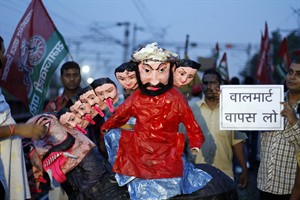
NEW DELHI – Angry opposition supporters disrupted trains in India on Thursday but had only limited success in enforcing a national strike to protest a government decision to cut fuel subsidies and open the country’s huge retail market to foreign companies.
Political backlash against the economic reform package presented by the Cabinet last week has left Prime Minister Manmohan Singh’s coalition scrambling to shore up its support and prevent early elections.
Some government allies have joined opposition parties in throwing their support behind the protests, which closed many schools and kept commercial trucks off the roads. However, many shops and businesses remained open, and the impact of the protest was barely felt in the main cities of Mumbai and New Delhi.
In a signal the government was on shaky ground, however, many of the protests in Uttar Pradesh state were led by the Samajwadi Party, which has been supporting the government from outside the fragile ruling coalition. The party said it would meet later Thursday to determine what action to take, but has been extremely critical of the reform package.
In Uttar Pradesh and Bihar state, protesters blocked railroad tracks. Some burned an effigy of Singh on the tracks, while others carried signs reading: “Go Back Wal-Mart,” a reference to the U.S. retail giant that is expected to enter the Indian market under the new regulations.
Singh, who came under intense criticism in recent months for presiding over a corrupt and paralyzed government, stunned the country with last week’s raft of reforms. The government announced a reduction in massive subsidies for diesel fuel and cooking gas. It also opened up the country’s enormous retail sector to foreign competitors, allowed local airlines to sell stakes to foreign carriers and pledged to sell off chunks of four state-run companies.
“It’s a very difficult decision for the government. We have tried to assure everybody that there was no other way except to take that decision to keep the economy on track,” Information Minister Ambika Soni said.
Opponents said the fuel hike would spark higher inflation and hurt the country’s poor. They said opening up the retail sector to foreign giants would crush the nation’s millions of small retail shops.
“India is heading toward economic slavery,” Rajnath Singh, a leader of the opposition Bharatiya Janata Party, said during a protest Thursday. He warned that the entry of Wal-Mart would flood India with Chinese-made goods, hurting local farmers, manufacturers and retailers.
The Trinamool Congress party announced it would pull out of the coalition Friday unless the economic package was withdrawn, leaving the ruling Congress party a few remaining hours to try to win it back. However, Finance Minister Palaniappan Chidambaram said the reforms would stand.
If the Trinamool Congress pulled out, India would be left with a minority government dependent on the outside support of either the Samajwadi Party or the Bahujan Samaj Party. The BSP said it would not decide until next month what action to take.
Government officials said they remained confident the government would survive until the next scheduled elections in 2014.
___
Associated Press writer Ashok Sharma contributed to this report.
___
Follow Ravi Nessman on Twitter at www.twitter.com/ravinessman
News from © The Associated Press, . All rights reserved.
This material may not be published, broadcast, rewritten or redistributed.

This site is protected by reCAPTCHA and the Google Privacy Policy and Terms of Service apply.
Want to share your thoughts, add context, or connect with others in your community?
You must be logged in to post a comment.