Elevate your local knowledge
Sign up for the iNFOnews newsletter today!
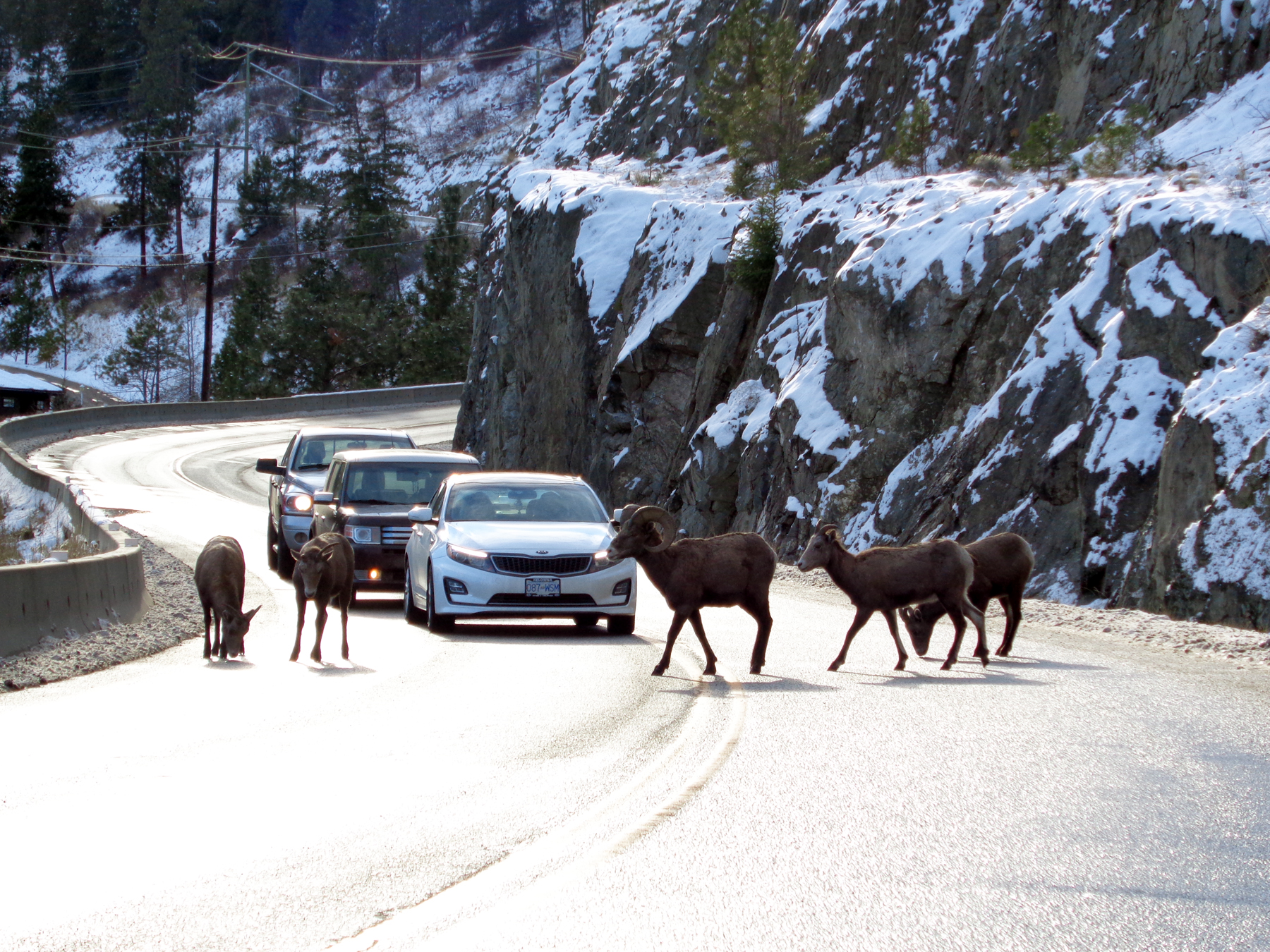
KELOWNA – A UBC Okanagan researcher has created a tool to help map bighorn sheep movement in an effort to monitor how they respond to human development in their habitat.
Corrie Allen is a graduate student and a contributing member to UBC Okanagan's Institute for Biodiversity, Resilience, and Ecosystem Services. She recently worked with a variety of stakeholders to examine the plummeting numbers of bighorn sheep in the Okanagan Valley.
“We are readily converting natural areas into urban subdivisions, agricultural fields, or highways,” says Allen. “This not only decreases the habitat available to a species, but can also fragment existing habitats into isolated patches. For species that require large tracks of natural areas to survive, such as bears, wolverines, and bighorn sheep, this is a big issue.”
Based on previous studies it is known that the bighorn sheep like steep, rocky terrain and they avoid densely vegetated areas or land with a closed canopy. The sheep rarely cross rivers or lakes and are deterred by roads.
Allen’s role in the project was to provide the ‘science’ that land-use planners can use to guide their land management decisions. As part of her contribution, she created a computer model that tracks how bighorn sheep might respond to changes in the landscape, which can be used in land-use planning computer models.
“I created a virtual bighorn sheep that wanders across a model of the Okanagan Valley by following a series of movement rules,” explains Allen. “With this model, we can explore where connectivity might exist on the landscape and how land-use decisions such as prescribed burns or building roads change bighorn sheep movement.”
In land-use planning, planners can conceptualize connectivity as a network of connected areas that animals can use to move between habitat patches. It’s a process that can become increasingly complex when considering the number of public and private stakeholders, including land owners and First Nations, with an interest in the process.
“It is important to recognize the choices we make on our landscapes today will change the options available to us in the future. There are a lot of decision makers in the Okanagan Valley interested in creating a functional and resilient landscape that supports a diverse spectrum of species and ecosystems into the future,” she says.
While Allen’s work has not provided all the answers for the bighorn sheep, it has demonstrated to land use planners how on-the-ground management or conservation scenarios can increase functional connectivity for the species in the study area. And her study also highlights the usefulness of individual-based models to identify how a species makes broad use of a landscape for movement.
News from © iNFOnews.ca, . All rights reserved.
This material may not be published, broadcast, rewritten or redistributed.

This site is protected by reCAPTCHA and the Google Privacy Policy and Terms of Service apply.
Want to share your thoughts, add context, or connect with others in your community?
You must be logged in to post a comment.