Elevate your local knowledge
Sign up for the iNFOnews newsletter today!
Sign up for the iNFOnews newsletter today!
Selecting your primary region ensures you get the stories that matter to you first.
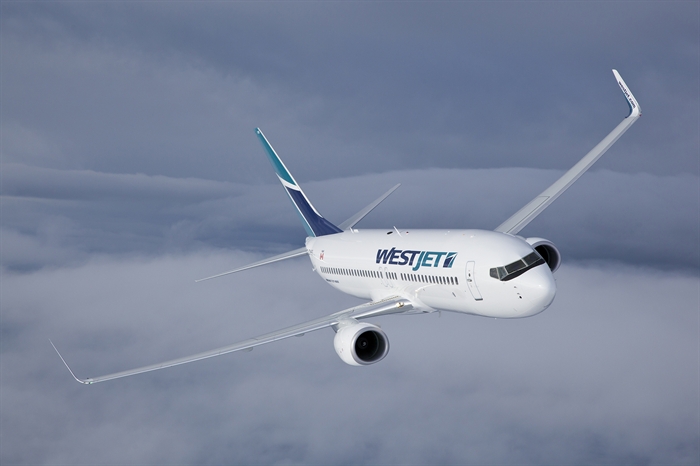
A BC Supreme Court ruling appears to have dealt a blow to air passengers’ ability to get compensation from airlines if they are delayed.
On Oct. 30, BC Supreme Court Justice Neena Sharma ruled that the province’s online small claims court, the BC Civil Resolution Tribunal, didn’t have the authority to order airlines to pay compensation to delayed passengers.
The Justice’s move cuts off an avenue often used by disgruntled passengers who have been refused compensation from the airlines.
The case involved a not-for-profit organization, Air Passenger Rights, which was going to bat for a Kelowna couple who were refused compensation from WestJet after a strike notice from pilots delayed their flight in 2023.
The court didn’t decide on whether the strike notice was a justifiable reason for not paying compensation after Justice Sharma ruled that the compensation passengers were seeking through legislation enacted by the Canadian Transportation Agency was not a “debt” and therefore the Civil Resolution Tribunal didn’t have the jurisdiction to order the airlines to cough up.
Air Passenger Rights founder Gábor Lukács called it a “completely incoherent ruling.”
Under current Canadian regulations, passengers who are delayed for more than three hours are eligible to be compensated by the airline if the delay was within the airline’s control.
In 2019, the Canadian Transportation Agency enacted the Air Passenger Protection Regulations, which mandated large airlines to pay $400 to passengers for delays between three and six hours, increasing to $1,000 for delays of more than nine hours.
However, if airlines refuse to pay up, often citing that the delay was out of their control, passengers have to go through the Air Travel Complaints Resolution Office, which has a backlog of 84,000 complaints waiting to be processed.
BC passengers have often resorted to taking airlines to the BC Civil Resolution Tribunal, the province’s online small claims court.
“WestJet blamed a crew shortage but a Kelowna man sued and won,” said one iNFOnews.ca headline in September after a successful outcome at the BC Civil Resolution Tribunal. “WestJet blames ‘pilot availability’ but Vernon snowbird sues and wins” another said early that month. “Flair Airlines blames Kelowna weather but BC man sues and wins” was a headline in July.
In the last 12 months, 35 people have taken Canadian airlines to the online Tribunal.
Lukács said the court’s recent ruling contradicts a judgment from the Supreme Court of Canada last year, which said passengers across the country can use the courts to claim compensation from airlines.
“That ruling is binding on all lower courts across Canada,” Lukács said.
Immediately after Justice Sharma’s ruling, Air Passenger Rights launched an appeal.
Lukács isn’t sure how long it will take the case to be heard at the BC Court of Appeal, but encourages passengers to still file with the Civil Resolution Tribunal and quote the Supreme Court of Canada case.
Stripping the public of the right to go to the online small claims court is another hurdle in Canadian passengers’ rights, in a situation which Lukács says is getting worse.
Lukács said the airlines’ watchdog is more like a “lapdog,” and with 85,000 complaints backlogged, it takes years for passengers to be compensated.
He said when the Air Passenger Protection Regulations were brought in they were watered down from initial plans and the system was made overly complicated.
In the European Union, airlines have to pay for delays unless there are “extraordinary circumstances” like severe weather or a volcanic eruption.
“The strength of that is that everybody knows where things are going,” he said. “The purpose is not to make airlines pay, but rather the purpose is to make airlines behave in a way that doesn’t trigger liability to begin with.”
According to numbers uncovered by the Investigative Journalism Foundation, about a third of Canadian flights are delayed each year, and most within the airlines’ control.
“What is missing is a strict enforcement that actually makes it very expensive to disobey the law,” Lukács said.
News from © iNFOnews.ca, . All rights reserved.
This material may not be published, broadcast, rewritten or redistributed.

This site is protected by reCAPTCHA and the Google Privacy Policy and Terms of Service apply.
Want to share your thoughts, add context, or connect with others in your community?
You must be logged in to post a comment.