Elevate your local knowledge
Sign up for the iNFOnews newsletter today!
Sign up for the iNFOnews newsletter today!
Selecting your primary region ensures you get the stories that matter to you first.
YANGON, Myanmar – Myanmar’s government has given access to foreign diplomats and aid workers in northern Rakhine state, where deadly attacks on police and Rohinya Muslims have flared up, diplomats said Friday.
Foreign diplomats including the U.S. and Britain ambassadors and EU and U.N. officials were invited by the government early this week to check the three-week surge in violence that was prompted by the killings of nine police officers at border posts with Bangladesh in Maungdaw township on Oct. 9.
“We hope that this is the first step for greater access for us to resume humanitarian assistance,” said U.S Ambassador to Myanmar Scot Marciel.
Since the latest violence, the government had restricted aid workers and media from the conflict areas of the northwestern state.
U.N. co-ordinator Renata Lok-Dessallien on Friday urged the government to launch an independent investigation into allegations of human rights abuses following her two-day trip to the region.
“The allegation of gender-based violence is worrying and we expressed this to the government, but we discussed mainly how to resume humanitarian assistance in the region,” she told reporters, asked about reports of rape against Rohingya women.
Despite having lived in Myanmar for generations, Rohingya are excluded from citizenship in the predominantly Buddhist nation of 50 million. More than 100,000 people have been driven from their homes into squalid camps for the displaced that have been guarded by police since violence broke out in June 2012.
The area in northwestern Rakhine depends largely on humanitarian aid for food and health care, but it has been cut off for weeks since the October violence broke out.
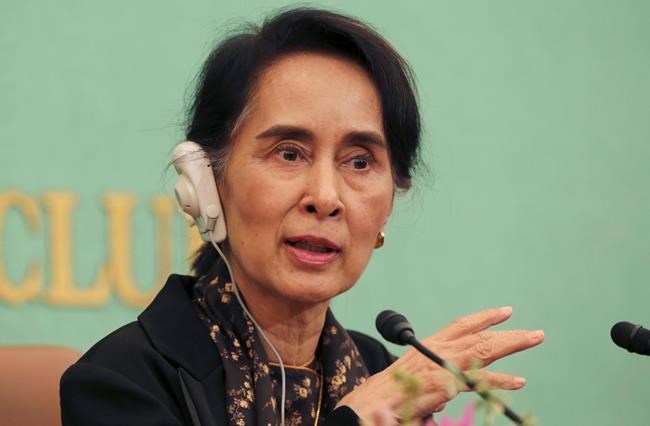
In Tokyo, Myanmar leader Aung San Suu Kyi said that her government will not blame anyone for the violence until authorities have all the evidence.
She said the Rakhine situation is delicate and that Myanmar’s government has been “very careful not to blame anybody in particular unless we have complete evidence as to who has been responsible for what.”
Suu Kyi, who was visiting Japan, acknowledged attacks on police outposts, including one on Thursday when she said one policeman was killed. Suu Kyi also said that there have been Muslims killed, but gave no details.
“We have not tried to hide any of this,” she told reporters. “All the facts are available on our information services and we are trying to get to the root of the matter.”
Myanmar’s state-own media reported that five soldiers had died during a “clearing operation” and suspects had been arrested.
___
Associated Press writer Mari Yamaguchi in Tokyo contributed to this report.
News from © The Associated Press, . All rights reserved.
This material may not be published, broadcast, rewritten or redistributed.

This site is protected by reCAPTCHA and the Google Privacy Policy and Terms of Service apply.
Want to share your thoughts, add context, or connect with others in your community?
You must be logged in to post a comment.