Elevate your local knowledge
Sign up for the iNFOnews newsletter today!
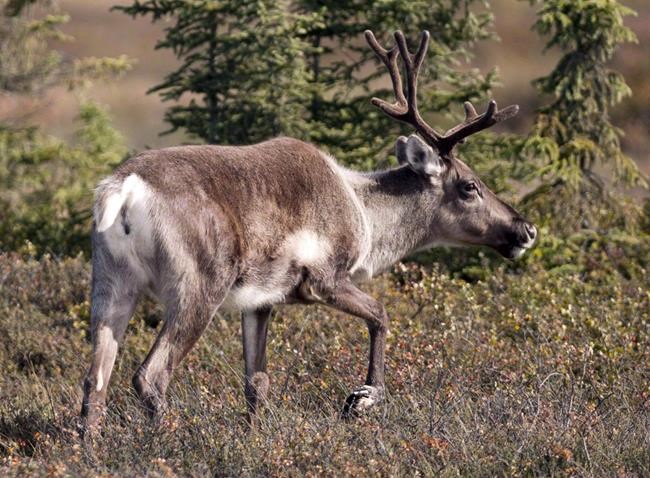
Wildlife managers are concerned a booming online trade in caribou meat may pose a threat to one of the last healthy herds on the Canadian tundra.
Hunters in the central Arctic have been taking so many animals from the Qaminirjuaq herd and sending the meat to parts of Nunavut where the hunt is restricted that airlines have been asked to report on their shipments.
"It's our top, No. 1 priority over the next several years," said Ross Thompson of the Beverly-Qaminirjuaq Caribou Management Board.
The Qaminirjuaq (pronounced kam-uh-NARE'-ee-ack) herd's range covers a huge swath from northern Saskatchewan to Queen Maud Gulf on the central Arctic coast. Almost 250,000 animals strong, it's not about to disappear. But the herd is only about half the size it was in the mid-1990s and biologists are watching.
Aboriginals in two provinces and two territories depend on the herd for food. And as caribou quotas grow tighter across the North and hunters and the hungry link up on Facebook, pressure on the Qaminirjuaq is growing.
The tiny community of Coral Harbour on Southampton Island has been shipping out between 5,000 and 7,000 kilograms of meat in the winter months, said Steve Pinksen of Nunavut's Environment Department. That's between 1,500 and 2,000 animals a year, roughly equal to what the community consumes itself.
Meat is also being shipped from Arviat, Rankin Inlet and Naujaat, formerly known as Repulse Bay.
"We're not in panic about this," Pinksen said. "But if the herd does continue a natural decline — and at the same time we have a substantial harvest in addition to the subsistence harvest — that does pose some concerns for the future."
Most of the meat ends up in the territorial capital of Iqaluit on Baffin Island — especially after biologists realized the island's herds had declined by 95 per cent.
"Ever since (then) the Baffin district cut their quota down to zero," said Alex Ishalook, a board member from Arviat. "We are caribou-eaters and the same goes up there."
Ishalook said most of the trade is between individuals and is facilitated by Facebook. Social media is popular in isolated northern communities and Facebook groups for buying, selling and trading country foods now have thousands of members.
A whole caribou sells for about $400, said Thompson.
Under the Nunavut land claim, Inuit are the only aboriginal group in Canada that has the right to sell game.
Part of the demand is fuelled by the high cost of northern groceries. Some of it is driven by increasingly tight quotas on other barren ground caribou herds.
Nine of Canada's 13 major caribou herds are declining.
Earlier this week, one management board in the Northwest Territories cut quotas for one of its herds and banned hunting on another.
The combination of a shrinking resource and the ability to sell what was once freely shared is changing things for Inuit, said Ishalook.
"It's not our traditional lifestyle, selling meat," he said. "We're working on ideas to improve all this selling."
The hunt is unrestricted and only the Nunavut Wildlife Management Board can impose a total allowable harvest. Inuit can take and sell as many caribou as they want, Pinksen said.
"It's people utilizing their constitutionally guaranteed rights."
But it may be hard to sustain those rights if all communities on the Qaminirjuaq range start taking twice as many animals as they need for their own use, Thompson said.
"We're not questioning the right, but in order for our board to work on behalf of those communities, we have to take all kinds of information," he said.
"As long as there's the financial factors involved, it's a tough chore we're facing."
— Follow Bob Weber on Twitter at @row1960
News from © iNFOnews.ca, . All rights reserved.
This material may not be published, broadcast, rewritten or redistributed.

This site is protected by reCAPTCHA and the Google Privacy Policy and Terms of Service apply.
Want to share your thoughts, add context, or connect with others in your community?
You must be logged in to post a comment.