Elevate your local knowledge
Sign up for the iNFOnews newsletter today!
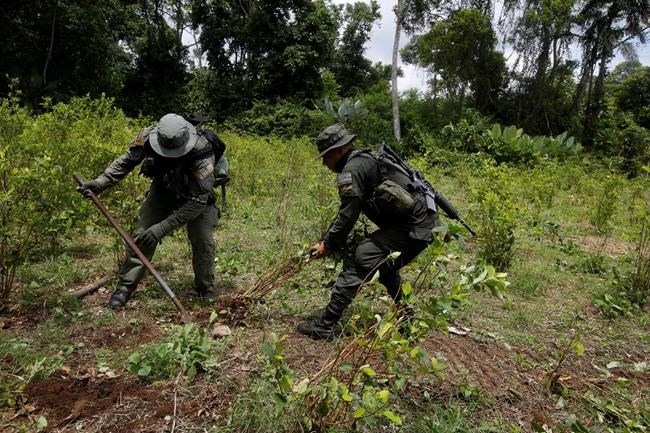
BOGOTA – Colombia’s police could start using drones to tackle a five-year surge in cocaine production that has jeopardized relations with the United States.
State contracting documents show that anti-narcotics police in the South American country have hired a local company to test drones for spraying herbicides on fields of coca, the base material for cocaine.
The remote-controlled devices will be expected to eradicate 8 hectares (20 acres) of coca per day, while carrying approximately 10 litres (2 gallons) of herbicide on every flight.
Coca cultivation has doubled in Colombia since 2012, and currently exceeds 188,000 hectares, according to U.S. estimates.
Three years ago Colombia decided to ban the aerial spraying of coca crops over environmental and health concerns. But drones fly at lower altitudes than spray planes and are expected to have a smaller environmental impact.
The drones could also help Colombian police get around some of the challenges that come with eradicating coca fields in remote and often hostile areas of the country, where the fields are sometimes defended by heavily armed drug trafficking groups or seeded with land mines.
“This decision addresses some of the concerns raised by aerial spraying,” said Juan Carlos Garzon, a drug policy specialist at Colombia’s Ideas for Peace Foundation. “But drones also have their limitations.”
Colombia’s decision to stop aerial eradication of coca crops has been harshly criticized by U.S. officials who have pushed the country to reduce cocaine production.
A DEA report in 2017 estimated 93 per cent of cocaine seized in the U.S. came from Colombia, whose potential cocaine production tripled from 2013 to 2016, according to the agency.
Colombian officials have argued, however, that aerial spraying destroys legal crops near coca fields and pollutes local water sources. A World Health Organization study said that glyphosate, the chemical used in spraying campaigns, could be a carcinogen, leading Colombia to cancel aerial fumigation.
Colombia is testing other devices as it tries to crack down on cocaine production, including small, armoured vehicles known as “caterpillars” that protect manual eradicators from land mines.
News from © iNFOnews.ca, . All rights reserved.
This material may not be published, broadcast, rewritten or redistributed.

This site is protected by reCAPTCHA and the Google Privacy Policy and Terms of Service apply.
Want to share your thoughts, add context, or connect with others in your community?
You must be logged in to post a comment.