Elevate your local knowledge
Sign up for the iNFOnews newsletter today!
Sign up for the iNFOnews newsletter today!
Selecting your primary region ensures you get the stories that matter to you first.
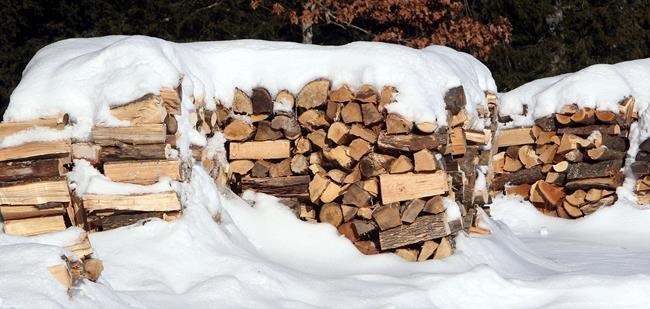
CONCORD, N.H. – They may be down but they’re not out: Damaging insects can emerge from fallen trees and logs for several years after a major storm, according to a U.S. Forest Service study that reinforces longstanding warnings against moving firewood from place to place.
Timber that gets blown down, broken or damaged by wind is often cut and used as firewood, which in turn can enable the spread of invasive, destructive insects that drain the life out of forests from New England to the West Coast.
Such pests are projected to put 63 per cent of the country’s forest at risk through 2027 and carry a cost of several billion dollars annually in dead tree removal, declining property values and timber industry losses, according to the peer-reviewed study last year in Ecological Applications.
The emerald ash borer alone, now in 30 states, has killed hundreds of millions of trees and has the potential to cause $12.7 billion in damage by 2020.
After a tornado tore through western Massachusetts in 2011, U.S. Forest Service officials based in New Hampshire collected ash, birch, maple, oak and pine logs from the affected area in 2012, 2013 and 2014, split them into firewood-sized pieces and put them in barrels. They painstakingly counted the insects that emerged from the wood — 32,121 to be exact. Eastern ash bark beetle was the most common, accounting for 85 per cent of the total.
Researchers were surprised to find that wood harvested even three years after the tornado produced a significant number of insects.
“It was a little surprising that even after three years, we still found insects associated with recently killed trees emerging from firewood,” said Kevin Dodds, one of the study’s lead authors.
Not all the trees die at the time of the tornado or wind storm. Instead, there is a range of damage and pockets of living trees that create insect habitat over time, researchers said.
“You might think that several years after a windstorm that blows down trees, it would be safe to cut the downed trees into firewood and transport them. But this study shows that some of this downed wood still harbours insects several years later,” said Gary Lovett, a senior scientist at the Cary Institute of Ecosystem Studies who was not involved in the study.
While the best solution is to keep invasive insects out of the country in the first place via stronger controls on imports, Lovett said, the study “reinforces the point that we should be using firewood locally rather than transporting it to use in second homes, cabins, or campsites.”
Nearly 40 states have imposed restrictions on the movement of firewood in an effort to protect forests from the pests. In New Hampshire, out-of-state firewood has been banned since 2011 and in some areas, is not allowed to be moved from county to county.
The study was published in January 2017 in the journal Agricultural and Forest Entomology.
News from © The Associated Press, . All rights reserved.
This material may not be published, broadcast, rewritten or redistributed.

This site is protected by reCAPTCHA and the Google Privacy Policy and Terms of Service apply.
Want to share your thoughts, add context, or connect with others in your community?
You must be logged in to post a comment.