Elevate your local knowledge
Sign up for the iNFOnews newsletter today!
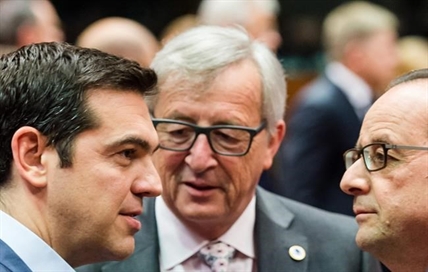
BRUSSELS – Greece moved closer on Sunday to a desperately needed deal with European creditors which would stave off immediate financial collapse and the country's potential exit from the euro but impose more hardship on its people.
Facing a self-imposed Sunday deadline, the eurozone's top official, Jeroen Dijsselbloem, said the sides have "come a long way" after two days of talks among finance ministers, but that the final effort on "some big issues" would be handled by eurozone leaders in a summit which was expected to go into the night.
Underscoring the optimism despite the often fundamental differences among the leaders, Italian Prime Minister Matteo Renzi said "we are very close."
The broad outline of a deal appeared to consist of a long series commitments from Greek Prime Minister Alexis Tsipras to push through much of a drastic austerity program within days, while the 18 other eurozone leaders would commit to start talks on a new bailout program.
In a four-page draft proposal put to eurozone leaders and obtained by The Associated Press, language up for discussion spoke of a potential "time out from the euro area" for Greece if no agreement could be found.
It highlighted the increasing frustration with Greece during five months of fruitless talks. On Sunday, doubts on the Greek government's commitment to implement tough measures continued.
"The most important currency has been lost: that is trust and reliability," said German Chancellor Angela Merkel, reflecting on five months of tortuous negotiations with Athens.
In the draft document, Greece committed itself to pushing a first set of measures through parliament by Wednesday. Despite the stinging conditions on pension, market and privatization reforms, Tsipras insisted his government was ready to clinch a deal.
"We owe that to the peoples of Europe who want Europe united and not divided," he said. "We can reach an agreement tonight if all parties want it."
Greece has asked Europe's bailout fund for a 53.5 billion-euro ($59.5 billion) 3-year financial package but many officials in Brussels say the figure will have to be much higher and insist on tough Greek austerity measures. This would be Greece's third bailout in five years.
Greece desperately needs help to avoid a financial collapse. The economy is in freefall and the country faces big debt repayments in the coming weeks. Greek banks have been shuttered for the best part of two weeks and daily withdrawals from ATMs have been limited to a paltry 60 euros ($67). The banks, according to some accounts, have barely enough cash to last through the week.
Merkel, however, insisted that Germany would not sway from its stance that Greece needs to do much more to get any help just to save its position in the 19-nation eurozone.
"There will not an agreement at all costs," she said, coming into Sunday's summit meeting. "Nerves are tense."
Highlighting the differences within the creditors' camp, French President Francois Hollande insisted it was vital to keep Greece in the currency club and avoid a so-called "Grexit."
If Greece had to leave the euro currency "it's Europe that would go backward," Hollande said. "And that I do not want."
France is considered Greece's closest ally and even helped Tsipras prepare the reform proposals that were a minimum requirement for getting fresh talks.
Finnish Finance Minister Alexander Stubb, one of Greece's most outspoken critics, said a package of proposals sent to the leaders involved three key elements, including the Greek parliament's passing of a series of unspecified laws by Wednesday.
If these conditions are met, then talks with Europe's bailout fund can proceed, Stubb said.
"We have surely taken a good leap forward," Stubb said.
Tsipras cleared one hurdle Saturday when lawmakers in the Greek parliament overwhelmingly backed a package of economic reforms and further austerity measures, in hopes that would convince European creditors to back the third bailout.
The eurozone ministers have to give their blessing to Greece's bailout request to the European Stability Mechanism. Traditionally, eurozone ministers agree by mutual consensus, though in exceptional circumstances a unanimous vote may not be needed.
Greece has received two previous bailouts totalling 240 billion euros ($268 billion) in return for deep spending cuts, tax increases and reforms from successive governments. Although the country's annual budget deficit has come down dramatically, Greece's debt burden has increased as the economy has shrunk by a quarter.
The Greek government has made getting some form of debt relief a priority and hopes that a comprehensive solution will involve European creditors at least agreeing to delayed repayments or lower interest rates.
Greek debt stands at around 320 billion euros ($357 billion) — a staggering 180 per cent or so of the country's annual GDP. Few economists think that debt will ever fully repaid. Last week, the International Monetary Fund said a restructuring of debt was necessary for Greece.
___
Menelaos Hadjicostis and John-Thor Dahlburg in Brussels contributed to this story.
News from © iNFOnews.ca, . All rights reserved.
This material may not be published, broadcast, rewritten or redistributed.

This site is protected by reCAPTCHA and the Google Privacy Policy and Terms of Service apply.
Want to share your thoughts, add context, or connect with others in your community?
You must be logged in to post a comment.














One response
the world is drenched in debt that can never be repaid; all of that debt manipulated in the last 40 years, before that there was no major debt. who are the creditors?-legal fictions fabricated corporations who are legally recognized as “persons”. These “persons” otherwise known as “monsters” have “schemed”most of the world in to debt to a point of bankruptcy; the only possible scenario is WWIII, which the Zionists are staging for now; if you pay close attention and know your history they are repeating history as the US and UN Zionists do their best to instigate Russia and china to fire the first shot,[as they did with japan and Germany] as well as creating a fake enemy ISIS that is in fact a CIA/Israel mossad invention of a enemy for propaganda that is worth sacrificing sending taxpayers dollars daughters and sons to war for profit and the reset of societies to a”New World Order” fabricated from fraud.The question is…are we going to let them?many countries facing bankruptcy have kicked the bankers out and jailed them for their crimes against society and humanity…each country is run as a business…to run the business/country into the ground is breach of trust and fraud. if there is a legitimate “person” who is legally owed the money, let them step forward and prove their claim. hint; google Iceland bankruptcy.