Elevate your local knowledge
Sign up for the iNFOnews newsletter today!
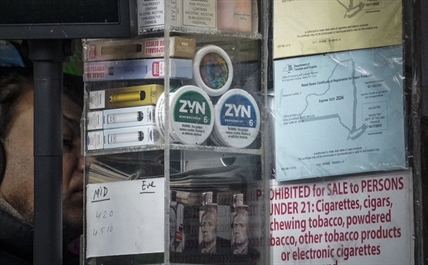
Researchers in B.C. found that young people aren’t using nicotine pouches at the same rate as vaping, but argue that restrictions on selling pouches ought to stay in place to keep it that way.
The McCreary Centre Society released results this week from one of the province’s first large-scale studies on young people using nicotine pouches, and the society’s executive director Annie Smith said that there are some concerning results.
The society is a B.C. non-profit organization that works to improve the health of young people through research, evaluation and community-based projects.
The society’s study included a survey of youth between the ages of 12 to 19 and found that 31 per cent had tried vaping, 19 per cent had tried tobacco and 11 per cent had tried nicotine pouches. There were 2,784 youths surveyed and 223 were from the Interior.
Nicotine pouches are small and filled with nicotine powder. They are placed between the lip and gum which releases the drug orally. No spitting is involved and they come in various flavours and nicotine strengths.
“The younger they are when they start, the more likely they are to struggle with it later in life,” Smith told iNFOnews.ca. “I don’t think 11 per cent is nothing to worry about, it’s a number to be really aware of.”
At the moment, the sale of nicotine pouches in Canada is restricted to pharmacies.
In September, B.C. MP Brad Vis tabled a petition in the House of Commons from small businesses, including convenience stores, that want to be able to sell nicotine pouches.
“Small businesses, including convenience stores, have a proven track record of responsibly selling age-restricted products, including nicotine pouches,” Vis said in the house on Sept. 20. “The petitioners are asking for the government to repeal this overburdensome regulation and to keep the process and sale of these products as they were before.”
Zonnic, a popular brand of pouches, lists 41 pharmacy retailers in Kelowna, 10 locations in West Kelowna, 17 in Vernon, 25 in Kamloops and 19 in Penticton.
Smith said the pouches are easy enough to get at pharmacies for adults who want to use nicotine pouches for the intended purpose as an aid to quit smoking.
“I definitely think keeping them in pharmacies is the way to go,” she said. “I don’t imagine there would be many adults that would complain about the extra safeguards being in place for young people.”
The McCreary study found that 46 per cent of youths got nicotine pouches from other teens, 32 per cent got them from adults, while just 27 per cent got them directly from a store and 14 per cent got them online.
Smith said that online access to nicotine products can be compared to online access to other age restricted activities like sports betting.
“They’re seeing all these adverts for gambling and how easy it is, and how quickly you can have such a great time if you’re winning money on sports, so we’ve seen a big rise in that, and I think nicotine pouches are the same,” she said. “Young people shouldn’t be able to get past the firewalls and be betting on sports online, but it’s easy for them to do so. We need stricter controls around those.”
There was also a distinct link between sports and nicotine pouches. The study found that 40 per cent of people who used them did so while playing sports or exercising.
“We’ve just seen the World Series, nicotine pouches are associated with baseball, and so there’s that worrying role adults might play in modelling the use of nicotine pouches,” Smith said.
She said that vaping spread quickly among young people and teenagers, even those who never smoked, and it’s important to learn lessons from what happened with vaping when it comes to regulating nicotine pouches.
“Vaping kind of got ahead of us, smoking rates were coming down, tobacco use was coming down among young people, and then vaping kind of sort of took us unawares,” she said. “The quicker we get more studies and we’re on top of the effects and the impacts, the better we can deal with it.”
The recent Ministry of Health anti-vaping campaign, called The A-Z of Vaping, simply outlined the health impacts of the chemicals used in and produced by vapes.
“It wasn’t a scare tactic. It just told young people the ingredients that were in there, and that’s what young people need. They want the information to make informed choices,” Smith said. “We can learn those lessons about what adverts resonate and what adverts don’t.”
The McCreary society wasn’t able to find other large studies on nicotine pouch use in teens.
Smith said the important thing for researchers to do is find any negative side effects of pouches and relay them in a non-confrontational way like the vaping campaign.
“There’s so much misinformation, and they can go on Instagram or Snapchat, and they will see influencers using these products. So I think it’s about getting the information out there about what’s in them and the potential harms associated with them,” she said.
News from © iNFOnews.ca, . All rights reserved.
This material may not be published, broadcast, rewritten or redistributed.

This site is protected by reCAPTCHA and the Google Privacy Policy and Terms of Service apply.
Want to share your thoughts, add context, or connect with others in your community?
You must be logged in to post a comment.