Elevate your local knowledge
Sign up for the iNFOnews newsletter today!
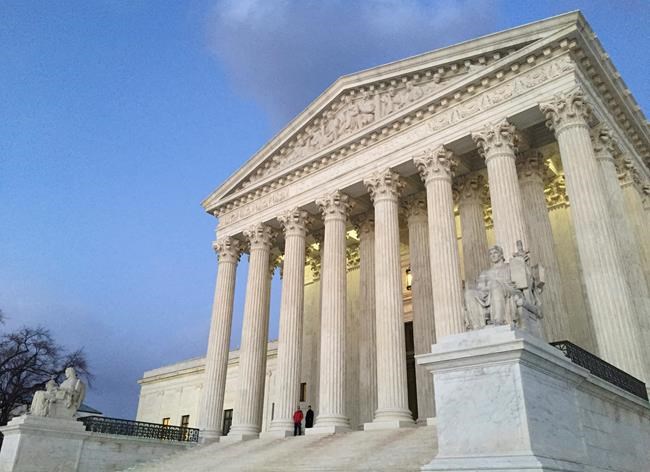
WASHINGTON – The Supreme Court on Monday turned away appeals from death row inmates in four states that raised different questions about the fairness of capital punishment.
Justice Stephen Breyer, commenting on two of those cases, repeated his call for the court to take up the constitutionality of the death penalty. Breyer said defendants who face death sentences are not society’s worst criminals but are “chosen at random, on the basis, perhaps of geography, perhaps of the views of the individual prosecutors, or still worse on the basis of race.”
The four appeals rejected Monday were from:
— James Tyler of Louisiana, whose lawyer conceded his guilt in the hope of drawing a life sentence, even though Tyler repeatedly objected to the strategy.
— Sammie Stokes of South Carolina, whose lawyer had previously prosecuted him for assaulting his ex-wife and never informed the judge about the earlier case.
— Romell Broom of Ohio, who survived a botched execution in 2009.
— Henry Sireci of Florida, who was first sentenced to death 40 years ago.
Breyer addressed Broom’s and Sireci’s cases on Monday, and made reference to an Alabama man who was executed last week even though the jury in his case had voted 7-5 to recommend a sentence of life in prison. The trial judge imposed a death sentence, lower courts upheld it and the justices divided 4 to 4 on whether to issue a last-minute stay — one vote less than was necessary to halt the execution.
Breyer said the cases are among those the high court has rejected that called for review of executions “taking place in what I would consider especially cruel and unusual circumstances.” The justice invoked language from the Constitution that prohibits “cruel and unusual punishments.”
Living under a death sentence for decades could itself be unconstitutional, Breyer said. When Sireci was first convicted in 1976 of stabbing a car salesman to death, more than half of today’s U.S. population had not yet been born, he said. And 40 years is longer than the average life span at the time when the Constitution was written, he said.
In Broom’s case, prison medical personnel tried for over two hours to a find a vein in which to inject drugs used in the execution, he said. The state now wants to try again. “Given its first failure, does its second attempt amount to a ‘cruel and unusual’ punishment?” he wrote. Justice Elena Kagan also voted to hear Broom’s appeal.
Breyer first spelled out his reservations about the death penalty last year in a case from Oklahoma, joined by Justice Ruth Bader Ginsburg.
Executions and new death sentences have been declining in recent years. Twenty inmates in five states have been executed in 2016, the lowest number since 1991, when 14 people were put to death. No more executions are scheduled this year.
News from © The Associated Press, . All rights reserved.
This material may not be published, broadcast, rewritten or redistributed.

This site is protected by reCAPTCHA and the Google Privacy Policy and Terms of Service apply.
Want to share your thoughts, add context, or connect with others in your community?
You must be logged in to post a comment.