Elevate your local knowledge
Sign up for the iNFOnews newsletter today!
WASHINGTON – Has the Obama administration quietly recognized the World War I-era killing of Armenians as genocide?
The term has long been taboo for U.S. officials, including President Barack Obama, who have instead talked of mass atrocity and historical tragedy. But Obama’s U.N. ambassador last week went further than her boss by describing the event as genocide.
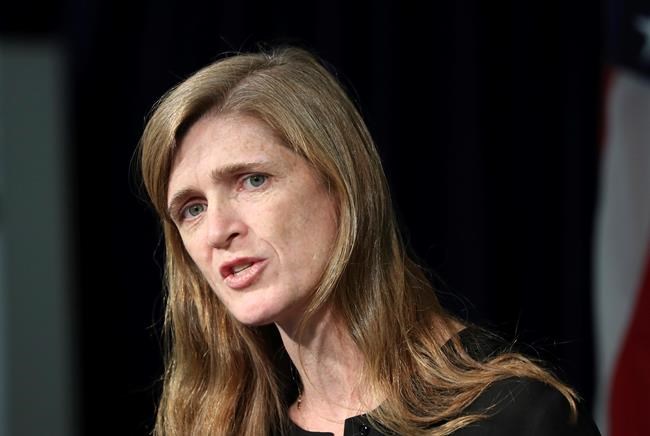
In a speech hailing the work of Holocaust survivor and Nobel peace laureate Elie Wiesel, Samantha Power lamented the injustices that continue to this day. Among these, she listed: “Genocide denial against the Armenians.” Power didn’t elaborate.
Those five words risk infuriating Turkey, which has fiercely opposed any genocide reference and whose strategic role as a key American partner and NATO ally in an unstable part of the world has led U.S. officials to exercise extreme caution when referencing the century-old massacre. They’re also surprising given Power’s status as the nation’s second highest-ranked diplomat and what sounded like her implicit criticism of Obama.
When he first ran for president, Obama promised he would recognize the killings as genocide if elected. But he has repeatedly stopped short of doing so. Marking Armenian Remembrance Day in April, Obama called the killings the first mass atrocity of the 20th century and a tragedy that must not be repeated.
Before entering government, Power was a Pulitzer Prize-winning journalist who wrote extensively about America’s responses to genocide. Officials say she has lobbied hard behind the scenes for Obama to formally recognize the Armenian killings as genocide.
Kurtis Cooper, Power’s spokesman, said the genocide reference came in the context of honouring Wiesel’s life and were meant to “convince others to stand up, rather than stand by, in the face of systemic injustice, mass atrocities and genocide like the one he was forced to endure.” He said they don’t reflect a change in administration policy.
State Department spokesman Mark Toner said there has been no change in U.S. policy.
“The president and other senior administration officials have repeatedly mourned and acknowledged as historical fact that 1.5 million Armenians were massacred or marched to their deaths in the final days of the Ottoman Empire, and stated that a full, frank and just acknowledgement of the facts is in all our interests,” Toner said.
Obama’s refusal to describe the killings as genocide has angered advocates and lawmakers who have accused the president of outsourcing America’s moral voice to Turkey.
Historians widely view the killings as genocide. But Turkey says commonly cited death tolls are inflated. In weighing how the U.S. refers to the tragedy, officials in Democratic and Republican administrations have long sought a middle ground that minimizes offence to Turkey, which is helping the United States fight the Islamic State group in Syria and Iraq.
President Ronald Reagan in 1981 did refer to the “genocide of the Armenians.” But presidents since have avoided such language.
President Jimmy Carter came close to saying genocide in 1978 by describing a “concerted effort made to eliminate all the Armenian people” and calling it “probably one of the greatest tragedies that ever befell any group.” He noted that unlike after the Holocaust, no justice occurred akin to the Nuremberg trials of top Nazi officials.
As a campaign surrogate eight years ago, Power released a video imploring Armenian-Americans to vote for Obama, saying he would follow through on his promise to talk frankly about what happened.
News from © The Associated Press, . All rights reserved.
This material may not be published, broadcast, rewritten or redistributed.

This site is protected by reCAPTCHA and the Google Privacy Policy and Terms of Service apply.
Want to share your thoughts, add context, or connect with others in your community?
You must be logged in to post a comment.